
How Much Does It Cost to Start a Print Sign Shop
Starting a print sign shop typically requires between $50,000 and $200,000 or more, depending on your location, equipment choices, and the range of services you plan to offer. The wide range reflects the difference between a lean, owner-operated setup and a fully equipped storefront ready to handle everything from vinyl banners to vehicle wraps.
Whether you are an entrepreneur exploring the signage industry for the first time or a small business owner looking to expand into print services, understanding every cost category before you sign a lease or purchase your first printer can save you thousands. The Dallas, TX market, in particular, presents unique opportunities and cost considerations worth examining closely.
This guide breaks down every major expense involved in opening a print sign shop. You will find realistic cost ranges for equipment, leasing, materials, permits, staffing, marketing, and the hidden expenses most new owners overlook. We also include a complete cost breakdown table and profitability insights to help you plan with confidence.
What Is a Print Sign Shop?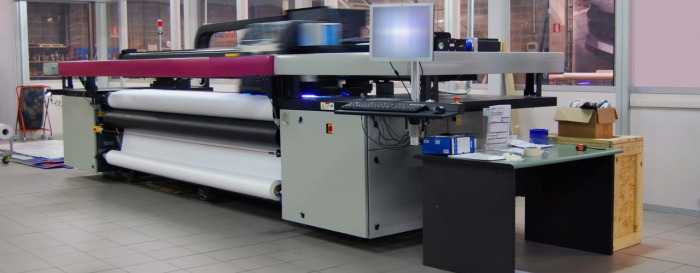
A print sign shop is a retail or commercial business that produces printed materials and custom signage for individuals, businesses, and organizations. These shops combine digital printing technology, design expertise, and finishing equipment to create products ranging from simple document prints and posters to large-format banners, vehicle wraps, and architectural signage.
Unlike a basic copy center, a print sign shop typically offers a broader range of services that include custom design, material selection, and installation. The business model can vary significantly based on the owner's investment level, target market, and service specialization.
Types of Print Sign Shops
Not every sign shop looks the same. The type you choose to open directly affects your startup costs.
Retail storefront shops operate from a street-facing commercial space and serve walk-in customers alongside business accounts. These require the highest investment in lease, build-out, and customer-facing presentation.
Production-focused shops prioritize wholesale or B2B work. They may operate from an industrial space with lower rent, focusing on volume output rather than foot traffic.
Mobile or home-based operations start with minimal overhead. An owner might run a vinyl cutting and small-format printing business from a garage or workshop, scaling up as revenue grows.
Franchise sign shops like FASTSIGNS, Signarama, or AlphaGraphics locations come with brand recognition and operational support but require franchise fees and ongoing royalties that add to startup costs.
Services a Print Sign Shop Typically Offers
The services you plan to offer will shape your equipment list and, by extension, your startup budget. Common services include:
Custom business signs (channel letters, monument signs, dimensional lettering)
Banners and large-format printing
Vehicle wraps and fleet graphics
Window graphics and wall murals
Trade show displays and pop-up banners
Yard signs and political signs
Posters, flyers, and marketing collateral
Document printing and binding
Vinyl lettering and decals
Wayfinding and ADA-compliant signage
A shop offering all of these services needs significantly more equipment and materials than one focused on two or three specialties.
Total Startup Cost Overview for a Print Sign Shop
The total investment to open a print sign shop varies widely based on your business model, location, and service scope. Here is a realistic breakdown of what to expect across three tiers.
Low-Budget Startup Range
Estimated cost: $50,000 to $75,000
At this level, you are likely operating from a small or shared commercial space, possibly even a home workshop. Equipment is limited to a mid-range large-format printer, a vinyl cutter, a laminator, and a computer with design software. You handle most tasks yourself, outsource specialty jobs, and keep your service menu focused on high-demand, lower-complexity products like banners, yard signs, and vinyl decals.
This range works for owner-operators who want to test the market before scaling. It requires discipline in budgeting and a willingness to grow incrementally.
Mid-Range Startup Investment
Estimated cost: $100,000 to $150,000
A mid-range investment allows you to lease a proper retail or light-industrial space, purchase reliable commercial-grade equipment, stock a reasonable inventory of materials, and hire one or two part-time employees. You can offer a broader service menu that includes large-format printing, basic vehicle graphics, trade show displays, and standard business signage.
Most independent sign shops in the Dallas area fall into this range. It provides enough capacity to serve both walk-in customers and small business accounts from day one.
High-End or Full-Service Shop Costs
Estimated cost: $175,000 to $300,000+
A full-service print sign shop with a prime retail location, top-tier equipment, a full staff, and the ability to handle complex projects like channel letter fabrication, vehicle wraps, and architectural signage will require a substantial investment. Franchise models often fall into this range as well, once you factor in franchise fees, required build-out standards, and initial marketing commitments.
This tier positions you to compete for larger commercial contracts and municipal projects immediately.
Equipment and Machinery Costs
Equipment is typically the single largest line item in a print sign shop startup budget. The quality and capability of your machines directly determine what services you can offer and how efficiently you can produce them.
Large-Format Printers and Plotters
A large-format inkjet printer is the backbone of most sign shops. These machines print on vinyl, banner material, fabric, and rigid substrates at widths of 54 inches to 64 inches or more.
Entry-level wide-format printers from brands like Roland, Mimaki, or Epson start around $15,000 to $25,000. Mid-range models with faster print speeds, better color accuracy, and white ink capability run $25,000 to $50,000. High-production models or flatbed UV printers can exceed $75,000 to $150,000.
For most new shops, a single reliable 54-inch or 64-inch eco-solvent or latex printer in the $20,000 to $35,000 range provides the best balance of capability and cost.
Vinyl Cutters and Laminators
A vinyl cutter is essential for producing cut lettering, decals, and stencils. Quality cutters from Graphtec, Roland, or Summa range from $3,000 to $8,000 depending on width and features like optical registration for print-and-cut workflows.
A cold laminator protects printed graphics from UV damage, scratching, and moisture. Expect to spend $2,000 to $6,000 for a 54-inch to 64-inch roll laminator.
Together, a cutter and laminator add roughly $5,000 to $14,000 to your equipment budget.
Heat Presses and Specialty Equipment
If you plan to offer heat-transfer products like custom apparel, promotional items, or sublimation printing, a heat press is necessary. Basic clamshell heat presses start around $500 to $1,500, while larger pneumatic or swing-away models run $2,000 to $5,000.
Other specialty equipment might include a CNC router for cutting rigid sign materials ($10,000 to $40,000+), a channel letter bending machine ($15,000 to $30,000), or a sewing machine for finishing fabric banners and flags ($500 to $2,000).
Most new shops do not need all of these on day one. Add specialty equipment as demand justifies the investment.
Computers, Software, and Design Tools
Every sign shop needs at least one capable design workstation. A computer with sufficient processing power, RAM, and a color-accurate monitor costs $1,500 to $3,500.
Software is an ongoing expense. Adobe Creative Cloud (Illustrator, Photoshop, InDesign) runs approximately $55 to $85 per month. RIP software for managing print output (such as Flexi, Onyx, or Wasatch) costs $1,000 to $5,000 for a license, depending on features. Some printer manufacturers bundle basic RIP software with equipment purchases.
You may also need estimating and shop management software. Options like Cyrious, shopVOX, or SignTracker range from $50 to $300 per month.
Budget $3,000 to $8,000 for your initial technology setup, plus ongoing subscription costs.
Lease, Location, and Build-Out Expenses
Your physical location affects rent, visibility, customer access, and even the types of projects you can handle. A shop that fabricates and installs large signs needs more space than one focused on digital printing and small-format work.
Commercial Lease Costs in Dallas, TX
Commercial lease rates in Dallas vary significantly by neighborhood and property type. According to commercial real estate data from LoopNet, light-industrial and flex spaces in the Dallas-Fort Worth area typically range from $10 to $18 per square foot per year on a triple-net (NNN) basis. Retail-facing spaces in higher-traffic areas can run $18 to $30+ per square foot.
A sign shop generally needs 1,200 to 3,000 square feet to accommodate equipment, a work area, material storage, and a small customer-facing area. That translates to roughly $1,000 to $4,500 per month in base rent, depending on location and space size.
Most landlords require a security deposit equal to one or two months' rent, plus first and last month's rent upfront. Budget $3,000 to $13,500 for initial lease costs alone.
Storefront Build-Out and Renovation
Unless you find a turnkey space, expect to invest in build-out. Common expenses include:
Electrical upgrades to support high-wattage printers and equipment: $2,000 to $8,000
HVAC modifications for proper ventilation (especially for solvent-based printing): $1,500 to $5,000
Flooring, lighting, and paint: $1,000 to $4,000
Customer reception area and display fixtures: $1,000 to $3,000
Workbenches, shelving, and storage: $500 to $2,000
Total build-out costs typically range from $5,000 to $20,000, depending on the condition of the space and the scope of work needed.
Utilities and Ongoing Facility Costs
Monthly utility costs for a sign shop in Dallas include electricity, water, internet, and phone service. Electricity is the largest variable, as large-format printers and climate control draw significant power.
Expect monthly utility costs of $400 to $1,200, depending on your space size and equipment load. Budget for this as an ongoing operating expense rather than a one-time startup cost, but factor in the first few months when revenue may not yet cover overhead.
Materials and Inventory Costs
You need materials on hand to produce jobs. Running out of vinyl or ink mid-project creates delays and damages customer relationships. But overstocking ties up cash. Finding the right balance is critical in the early months.
Vinyl, Substrates, and Inks
Adhesive vinyl is one of the most frequently used materials in a sign shop. A standard 24-inch by 50-yard roll of calendered vinyl costs $30 to $60. Cast vinyl, which is more durable and conformable for vehicle wraps, runs $150 to $400+ per roll depending on brand and finish.
Rigid substrates like Coroplast (corrugated plastic), PVC board (Sintra), aluminum composite (Dibond), and acrylic are purchased in 4x8-foot sheets. Prices range from $15 per sheet for Coroplast to $80 to $150+ per sheet for aluminum composite and acrylic.
Ink costs depend on your printer type. Eco-solvent ink cartridges or bulk ink systems typically cost $100 to $300 per liter. A new shop should budget $1,000 to $3,000 for an initial ink supply.
Paper Stock, Banner Materials, and Specialty Media
Banner material (scrim vinyl) costs $50 to $150 per roll for standard 13-ounce material. Fabric banners, mesh banners, and specialty media like canvas, backlit film, and perforated window vinyl each have different price points.
If you offer document printing, poster printing, or marketing collateral, you will also need paper stock in various weights and finishes. Budget $500 to $1,500 for an initial paper and specialty media inventory.
Initial Inventory Budgeting Tips
For a new shop, a practical approach is to stock materials for your three to five most popular services and order specialty materials on a per-job basis. This keeps your initial inventory investment between $3,000 and $8,000 while minimizing waste.
Establish accounts with major suppliers like Grimco, Fellers, or GSG early. Many offer net-30 payment terms for qualified businesses, which helps manage cash flow during the startup phase.
Licensing, Permits, and Legal Fees
Opening a print sign shop requires more than equipment and a lease. You need to meet legal and regulatory requirements at the city, county, and state levels.
Business Registration and Licenses in Texas
Registering a business in Texas involves several steps. If you form an LLC or corporation, filing fees with the Texas Secretary of State are $300 for an LLC or $300 for a corporation. A sole proprietorship or general partnership requires a DBA (Doing Business As) filing, which costs approximately $25 to $50 at the county level.
You will also need a Texas Sales and Use Tax Permit, which is free to obtain through the Texas Comptroller's office. If you hire employees, you must register for a federal Employer Identification Number (EIN) at no cost through the IRS.
Legal fees for having an attorney review your lease, draft operating agreements, or advise on business structure typically run $500 to $2,000.
Insurance Requirements for a Sign Shop
Business insurance is not optional. At minimum, you need:
General liability insurance: $500 to $1,500 per year
Commercial property insurance (covering equipment and inventory): $500 to $2,000 per year
Workers' compensation insurance (required in Texas if you have employees, though Texas does not mandate it for all employers): varies by payroll
Commercial auto insurance (if you use a vehicle for deliveries or installations): $1,200 to $3,000 per year
Total first-year insurance costs typically range from $2,000 to $6,000, depending on coverage levels and the size of your operation.
Zoning and Signage Permits in Dallas
The City of Dallas has specific zoning regulations that affect where you can operate a sign shop, particularly if your work involves fabrication, chemical use (inks, solvents), or outdoor storage of materials. Verify that your chosen location is zoned for light manufacturing or commercial use before signing a lease.
If you install signs for customers, you or your customers will need sign permits from the City of Dallas. Permit fees vary based on sign type and size, typically ranging from $50 to $500 per permit. While this is usually a pass-through cost to the customer, understanding the permitting process is part of your operational knowledge.
Budget $200 to $1,000 for your own business signage permits and any initial zoning compliance costs.
Staffing and Labor Costs
Your staffing model has a major impact on both startup costs and ongoing profitability. Many sign shop owners start as the sole operator and add staff as revenue grows.
Hiring Designers and Production Staff
If you hire from day one, expect the following salary ranges in the Dallas market:
Graphic designer with sign shop experience: $38,000 to $55,000 per year (or $18 to $26 per hour)
Production/print operator: $30,000 to $42,000 per year (or $14 to $20 per hour)
Installer (signs and wraps): $35,000 to $55,000 per year, depending on experience
Part-time counter/sales help: $12 to $16 per hour
Including payroll taxes, benefits, and workers' compensation, add approximately 15% to 25% on top of base wages for your true labor cost.
Hiring even one full-time employee adds $35,000 to $60,000+ to your first-year expenses.
Owner-Operator vs. Fully Staffed Models
An owner-operator model keeps labor costs near zero in the startup phase. You handle design, production, sales, and installation yourself. This is physically demanding and limits your capacity, but it preserves cash and lets you learn every aspect of the business.
A fully staffed model from day one requires a larger initial investment but allows you to take on more work and focus on sales and business development. Most successful sign shop owners start somewhere in between, handling core tasks personally and hiring their first employee once monthly revenue consistently exceeds $8,000 to $12,000.
Marketing and Customer Acquisition Costs
A sign shop without customers is just an expensive hobby. Allocating budget for marketing from the start is essential, especially in a competitive market like Dallas.
Website, SEO, and Online Presence
A professional website is non-negotiable. A custom-designed site with portfolio galleries, service descriptions, a quote request form, and local SEO optimization costs $2,500 to $7,500 to build. Template-based options through platforms like WordPress or Squarespace can reduce this to $500 to $1,500, though they may lack the polish and functionality of a custom build.
Ongoing SEO services to rank for local search terms like "sign shop near me" or "custom signs Dallas" typically cost $500 to $2,000 per month. Google Business Profile optimization is free but requires consistent attention.
Budget $3,000 to $10,000 for your initial web presence and first few months of digital marketing.
Local Advertising and Networking in Dallas
Local marketing channels for a sign shop include:
Google Ads (pay-per-click): $500 to $2,000 per month for targeted local campaigns
Social media advertising (Facebook, Instagram): $200 to $800 per month
Chamber of Commerce membership: $200 to $600 per year in Dallas
Networking events and trade shows: $500 to $2,000 for booth fees and materials
Direct mail or door-to-door sales to local businesses: $200 to $500 for initial outreach
In the first year, plan to spend $5,000 to $15,000 on marketing and advertising combined.
Signage Samples and Portfolio Development
Ironically, a sign shop needs signs to sell signs. Producing sample products for your showroom, creating a portfolio of work, and making your own storefront signage are real costs.
Budget $1,000 to $3,000 for sample materials, display fixtures, and your own business signage. This investment pays for itself quickly when customers can see and touch the quality of your work.
Hidden and Often Overlooked Startup Costs
Every new sign shop owner encounters expenses they did not anticipate. Planning for these reduces financial stress in the critical first months.
Delivery and Installation Equipment
If you install signs, you need tools and transportation. A reliable work van or truck costs $15,000 to $35,000 used, or $300 to $700 per month to lease. Installation tools including ladders, drills, rivet guns, levels, and safety equipment add $1,000 to $3,000.
Some new shop owners use their personal vehicle initially and subcontract installations to keep costs down. This works short-term but limits your ability to control quality and scheduling.
Training and Certification
Operating a large-format printer, applying vehicle wraps, and installing channel letters all require skills that take time to develop. Training options include:
Manufacturer training courses (often included with equipment purchase or $500 to $2,000 for advanced sessions)
Industry certifications through organizations like the International Sign Association (ISA): $200 to $1,000
Wrap installation training from 3M or Avery Dennison: $500 to $2,500 for multi-day courses
Online courses and tutorials: $0 to $500
Budget $1,000 to $4,000 for initial training, and plan for ongoing education as you add services.
Waste, Mistakes, and Learning Curve Expenses
New operators waste more material than experienced ones. Misprints, color calibration issues, cutting errors, and installation mistakes are part of the learning process. A realistic waste budget for the first six months is 5% to 15% of your total material costs.
On a $5,000 initial material investment, that means $250 to $750 in expected waste. Factor this into your budget rather than being surprised by it.
How to Reduce Startup Costs for Your Print Sign Shop
Not every shop needs to launch with top-of-the-line equipment and a full staff. Strategic cost reduction can get you operational faster and with less financial risk.
Buying Used or Refurbished Equipment
The used market for sign shop equipment is active. Large-format printers, vinyl cutters, and laminators from shops that have upgraded or closed can be purchased at 40% to 60% of new prices. Check industry forums, Facebook groups like "Sign Shop Buy/Sell/Trade," and equipment dealers who offer refurbished machines with limited warranties.
A used 54-inch eco-solvent printer in good condition might cost $8,000 to $15,000 instead of $20,000 to $30,000 new. The savings are significant, but inspect equipment carefully and verify print quality before purchasing.
Starting with a Focused Service Menu
You do not need to offer every service from day one. Starting with three to five core services, such as banners, yard signs, vinyl lettering, and basic business signage, lets you invest in the specific equipment and materials those services require.
As revenue grows and you identify demand for additional services, you can expand your capabilities incrementally. This approach can reduce your initial equipment investment by 30% to 50% compared to a full-service launch.
Outsourcing Specialty Jobs Early On
Many established sign shops and trade printers offer wholesale or trade pricing for specialty work. Vehicle wraps, channel letters, neon signs, and large monument signs can be outsourced to trade partners while you build volume and expertise.
This lets you say "yes" to customer requests without owning the equipment to produce every product in-house. Your margin on outsourced work will be lower, but you avoid the capital expense of equipment you may only use occasionally.
Print Sign Shop Startup Cost Breakdown Table
The following table summarizes estimated startup costs for a print sign shop in the Dallas, TX area across three investment levels.
These figures represent realistic ranges based on current market conditions in the Dallas-Fort Worth area. Your actual costs will depend on specific equipment choices, lease negotiations, and the scope of services you plan to offer.
Is Owning a Print Sign Shop Profitable?
Understanding startup costs is only half the equation. You also need to know whether the business can generate enough revenue to justify the investment.
Average Revenue and Profit Margins
According to IBISWorld's industry report on sign manufacturing, the sign industry in the United States generates over $50 billion in annual revenue across all segments. Small to mid-sized sign shops typically generate $200,000 to $1 million+ in annual revenue, depending on location, service mix, and sales effort.
Profit margins in the sign industry generally range from 10% to 20% for net profit after all expenses. Shops that focus on higher-margin products like vehicle wraps, custom dimensional signage, and large-format graphics tend to perform at the upper end of that range. Print-heavy shops competing primarily on price for commoditized products like business cards and flyers operate at thinner margins.
Gross margins on individual products vary widely. Vinyl banners might carry a 50% to 65% gross margin, while vehicle wraps can reach 60% to 75% when produced and installed in-house.
How Long Until a Sign Shop Breaks Even
Most new sign shops reach break-even within 12 to 24 months, assuming consistent marketing effort and reasonable cost management. Shops that launch with a strong local network, existing customer relationships, or a niche specialization often break even faster.
The key variables are monthly fixed costs (rent, insurance, loan payments, software subscriptions) and your ability to generate consistent sales volume. A shop with $5,000 per month in fixed costs needs to generate roughly $8,000 to $12,000 in monthly revenue to cover all expenses, including materials and labor.
Reaching $15,000 to $20,000 in monthly revenue, a realistic target within the first year for an active owner-operator in the Dallas market, puts most shops into profitable territory.
Conclusion
Starting a print sign shop requires a significant but manageable investment. From equipment and lease costs to materials, permits, and marketing, every dollar you spend should align with a clear plan for the services you will offer and the customers you will serve. The Dallas market offers strong demand for quality signage and printing services, making it a viable location for a well-planned shop.
Understanding these costs upfront gives you the power to make smarter decisions about where to invest, where to save, and when to scale. Whether you start lean as an owner-operator or launch a fully equipped storefront, the path to profitability depends on matching your investment to real market demand and delivering consistent quality.
At AlphaGraphics Dallas, we have built our business on exactly these principles. If you are exploring the signage industry or need a trusted partner for professional printing and signage solutions, we are here to help. Contact our team to discuss your project or learn more about what a professional sign shop can do for your business.
Frequently Asked Questions
How much does it cost to open a small sign shop?
A small, owner-operated sign shop can be started for $33,000 to $65,000. This covers basic equipment like a large-format printer, vinyl cutter, laminator, design software, initial materials, and a modest commercial lease. Starting small and scaling as revenue grows is a common and effective approach.
What equipment do I need to start a print sign shop?
At minimum, you need a large-format inkjet printer, a vinyl cutter, a laminator, a computer with design software, and RIP software for print management. Additional equipment like heat presses, CNC routers, or channel letter benders can be added later based on the services you offer.
Is a sign shop a good business to start?
Yes, for owners willing to invest in quality equipment, marketing, and customer relationships. The sign industry generates over $50 billion annually in the U.S., and local sign shops benefit from recurring demand for business signage, event graphics, and marketing materials. Profit margins of 10% to 20% are typical for well-run shops.
Do I need a license to open a sign shop in Texas?
You need a general business registration (LLC, corporation, or DBA filing), a Texas Sales and Use Tax Permit, and potentially local permits depending on your city and zoning. Dallas may require additional permits for sign installation work. There is no state-level "sign shop license" in Texas, but compliance with local regulations is required.
How long does it take for a sign shop to become profitable?
Most new sign shops reach break-even within 12 to 24 months. Shops with strong local networks, focused service offerings, and consistent marketing efforts often reach profitability faster. Monthly revenue of $15,000 to $20,000 typically puts an owner-operated shop into profitable territory.
Can I start a sign business from home?
Yes, many sign businesses start from a home garage or workshop with a vinyl cutter and a small-format or mid-format printer. This approach dramatically reduces overhead costs. However, check local zoning regulations in Dallas, as some residential areas restrict commercial activity, chemical storage, or customer traffic.
What are the most profitable products for a sign shop?
Vehicle wraps, custom dimensional signage, and large-format graphics tend to carry the highest margins, often 60% to 75% gross profit when produced and installed in-house. Recurring products like real estate signs, event banners, and fleet graphics also provide steady, profitable revenue streams.
