
How Much Does It Cost to Print a Twenty Dollar Bill
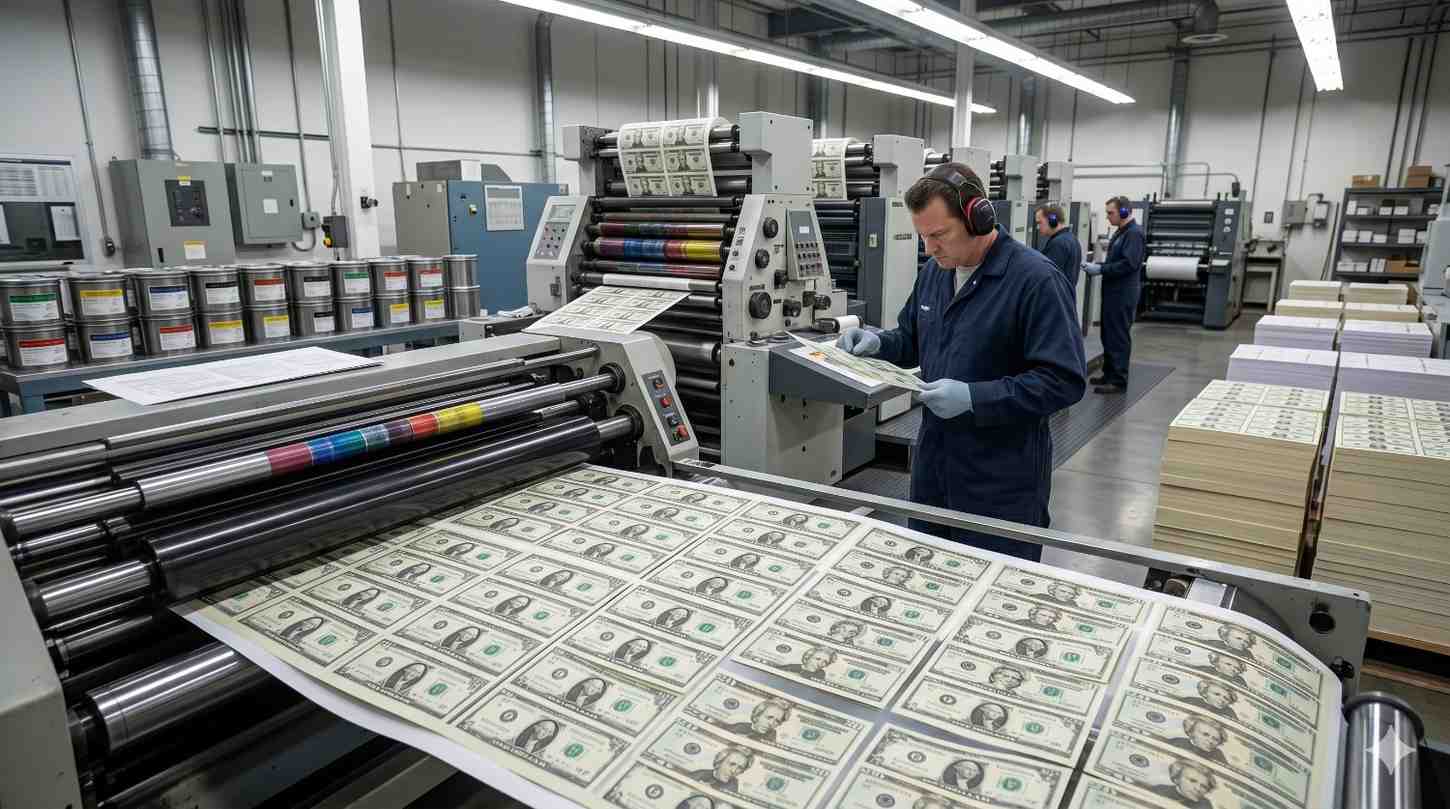
Printing a $20 bill costs the U.S. government approximately 11.5 cents per note, according to the Bureau of Engraving and Printing. That figure covers the specialized paper, security inks, and multi-step intaglio printing process that makes U.S. currency nearly impossible to replicate accurately. For anyone else, the cost is not measured in cents — it is measured in federal criminal penalties.
This matters because the question comes up more often than you might expect, and the answer has real consequences worth understanding clearly.
This article explains the actual production cost, the legal reality of currency printing, and what professional printing services in Dallas can do for your legitimate printing needs.
What Does It Actually Cost to Print a Twenty Dollar Bill?
The Bureau of Engraving and Printing reported that producing a single $20 Federal Reserve Note costs approximately 11.5 cents as of the most recently published production data. That cost reflects a highly specialized manufacturing process that no commercial printer — and no individual — can replicate.
U.S. currency is printed on a cotton-linen blend paper that is produced exclusively for the federal government. The printing process uses intaglio printing, a technique where ink is pressed into engraved metal plates under extreme pressure, creating the raised texture you can feel when you run your finger across a bill. Multiple security features are embedded during production, including color-shifting ink, microprinting, security threads, and watermarks.
The per-unit cost is low because the Bureau of Engraving and Printing produces currency at massive scale — billions of notes annually across all denominations. The infrastructure, materials, and security systems behind that production represent an investment that no private entity can access or replicate.
Why Printing Currency Is Illegal in the United States
Reproducing U.S. currency is a federal crime under 18 U.S.C. § 471, regardless of intent. It does not matter whether the reproduction is intended for use as actual currency, as a prop, or as a novelty item — the law applies broadly to any unauthorized reproduction of U.S. legal tender.
The penalties are serious. A conviction under federal counterfeiting statutes can result in up to 20 years in federal prison and significant fines. The U.S. Secret Service is the primary agency responsible for investigating counterfeiting, and prosecutions occur regularly even for cases involving small quantities or first-time offenders.
There are narrow exceptions for certain educational and artistic uses, but these exceptions come with strict requirements — including that reproductions must be single-sided, printed at a size that is clearly not intended to pass as real currency (less than 75% or more than 150% of actual size), and must include the word "REPLICA" or "FACSIMILE" printed clearly on the reproduction. Even within these exceptions, the rules are complex enough that legal guidance is strongly recommended before proceeding.
The bottom line: printing a $20 bill, or any U.S. currency, outside of the Bureau of Engraving and Printing is not a gray area. It is a federal offense.
What People Are Really Looking For When They Search This Question
Most people who search this question are not planning to counterfeit money. They are curious about how currency production works, or they are using the question as a starting point for a broader interest in printing costs and printing services.
If you landed here because you need something printed — a document, a poster, a flyer, a banner, or a sign — you are in the right place. The question of what it costs to print a $20 bill is interesting, but the more useful question is: what does it cost to print what you actually need?
Professional printing services in Dallas cover a wide range of formats, materials, and turnaround times. Whether you need a single-page document printed today or a set of custom signs for an upcoming event, there are clear, straightforward options available to you.
Professional Printing Services for Documents, Posters, and Signs
Whether you need a single-page document or a full run of marketing materials, our professional printing services cover every format, finish, and turnaround time you need in Dallas. Here is a breakdown of the most common service categories and what to expect from each.
Document and Standard Paper Printing
Document printing covers standard paper sizes — 8.5 x 11, 8.5 x 14, and 11 x 17 — in both black-and-white and full color. Pricing varies based on quantity, paper weight, and whether the job is single-sided or double-sided. Black-and-white document printing typically starts at a few cents per page for larger quantities, while full-color printing on standard paper runs higher depending on ink coverage and paper stock. Most standard document jobs can be completed same day or within 24 hours.
Poster and Large-Format Printing
From trade show graphics to event banners, our large-format printing <!--NEW PAGE NEEDED--> delivers sharp, vibrant output at any size — with fast turnaround for Dallas walk-in and online customers. Poster printing is available in a range of standard and custom sizes, with output on paper, vinyl, canvas, or foam board depending on the intended use. Resolution requirements for large-format printing are different from standard document printing — files should be set up at a minimum of 150 DPI (dots per inch) at the final print size to ensure sharp output.
Custom Signs and Banners
When your project calls for something more permanent, our custom signs and banners <!--NEW PAGE NEEDED--> are produced with commercial-grade materials and precision finishing for both indoor and outdoor use. Options include vinyl banners, coroplast yard signs, foam board displays, and rigid substrates for long-term outdoor applications. Finishing options such as grommets, hemming, and mounting hardware are available depending on the sign type and installation requirements.
How to Prepare Your File for Professional Printing
File preparation is one of the most common points where printing projects run into delays. Submitting a print-ready file from the start saves time and ensures the output matches your expectations.
The most important technical requirements for professional printing are:
Resolution: Files should be set up at 300 DPI for standard document and poster printing. Large-format files can use lower resolution — typically 150 DPI at final print size — because they are viewed from a greater distance.
Color mode: Files intended for print should be set up in CMYK color mode, not RGB. RGB is the color mode used for screens, and colors can shift significantly when converted to CMYK during the printing process. Setting up your file in CMYK from the start prevents unexpected color changes in the final output.
Bleed: Bleed refers to the area of your design that extends beyond the trim edge of the final printed piece. A standard bleed of 0.125 inches on all sides ensures that no white edges appear after trimming. If your design has color or imagery that runs to the edge of the page, bleed is required.
File format: PDF is the preferred file format for most professional printing jobs. Vector-based files (AI, EPS) are preferred for logos and line art. JPEG and PNG files are acceptable for photo-based content when set up at the correct resolution.
Getting your artwork ready before you arrive saves time and ensures the best possible output — our print file preparation <!--NEW PAGE NEEDED--> guide walks through resolution, bleed, color mode, and accepted file formats step by step.
Walk-In vs. Online Upload: Which Option Works Best for You?
AlphaGraphics Dallas offers two primary ways to submit a print job: walk in with your file, or upload it online in advance.
Walk-in printing is the right choice when you need something printed today, when you want to review a proof in person before the full job runs, or when you have questions about materials, finishes, or sizing that are easier to discuss face to face. If you need something printed today without scheduling ahead, our walk-in printing options <!--NEW PAGE NEEDED--> are available at our Dallas location with same-day turnaround on most standard formats.
Online upload works well when you have a print-ready file, you know exactly what you need, and you want to place your order without making a trip to the shop. Online orders can be submitted at any time, and most standard jobs are ready for pickup or delivery within one to two business days.
For complex projects — custom signs, large-format graphics, or multi-piece print runs — a brief conversation with a print specialist before submitting your file can prevent costly errors and ensure the final product meets your expectations.
Conclusion
The cost to print a $20 bill is about 11.5 cents for the U.S. government — and an entirely different kind of cost for anyone else. Understanding the legal boundaries around currency reproduction is straightforward once the facts are clear.
For the printing needs you actually have — documents, posters, signs, and banners — professional options in Dallas are accessible, affordable, and faster than most people expect.
At AlphaGraphics Dallas, we help individuals and businesses get exactly what they need printed, with expert guidance on file preparation, materials, and turnaround times. Stop by or reach out today to get started.
Frequently Asked Questions
How much does the U.S. government spend to print a $20 bill?
The Bureau of Engraving and Printing reports a production cost of approximately 11.5 cents per $20 Federal Reserve Note. This cost covers specialized paper, security inks, and the multi-step intaglio printing process used to produce U.S. currency.
Is it illegal to print a copy of a $20 bill at home?
Yes. Reproducing U.S. currency without authorization is a federal crime under 18 U.S.C. § 471, regardless of intent. Penalties can include up to 20 years in federal prison. Narrow exceptions exist for educational and artistic reproductions, but these come with strict size and labeling requirements.
What does it cost to print a poster or document in Dallas?
Pricing depends on size, quantity, paper stock, and color. Standard black-and-white document printing typically starts at a few cents per page for larger quantities. Full-color posters and large-format prints vary based on size and material. AlphaGraphics Dallas can provide a quote based on your specific project requirements.
What file format should I use when submitting a print job?
PDF is the preferred format for most professional printing jobs. Files should be set up in CMYK color mode at 300 DPI for standard printing, or 150 DPI at final print size for large-format output. Including a bleed of 0.125 inches on all sides is recommended for any design with color or imagery that runs to the edge.
Can I walk in to AlphaGraphics Dallas and get something printed the same day?
Yes. AlphaGraphics Dallas accepts walk-in print jobs and offers same-day turnaround on most standard document and poster formats. Bringing a print-ready file speeds up the process and helps ensure the output matches your expectations.
What is the difference between CMYK and RGB for printing?
CMYK is the color mode used in professional printing, while RGB is used for digital screens. Files set up in RGB can produce unexpected color shifts when printed. Setting your file to CMYK before submission ensures the printed colors match your design as closely as possible.
Does AlphaGraphics Dallas offer custom sign printing?
Yes. AlphaGraphics Dallas produces custom signs and banners in a range of materials, including vinyl, coroplast, foam board, and rigid substrates for indoor and outdoor use. Finishing options such as grommets and hemming are available depending on the sign type and installation requirements.
