
How to Find a Reputable Sign Shop
Finding a reputable sign shop starts with knowing what to look for: a strong portfolio, transparent pricing, quality materials, and reliable turnaround times. Whether you need a single poster printed or a full set of custom business signs, the sign shop you choose directly affects the quality, cost, and timing of your finished product.
This guide walks you through the types of sign shops available, the key qualities that separate reliable providers from the rest, and exactly how to evaluate your options before placing an order.
Why Choosing the Right Sign Shop Matters
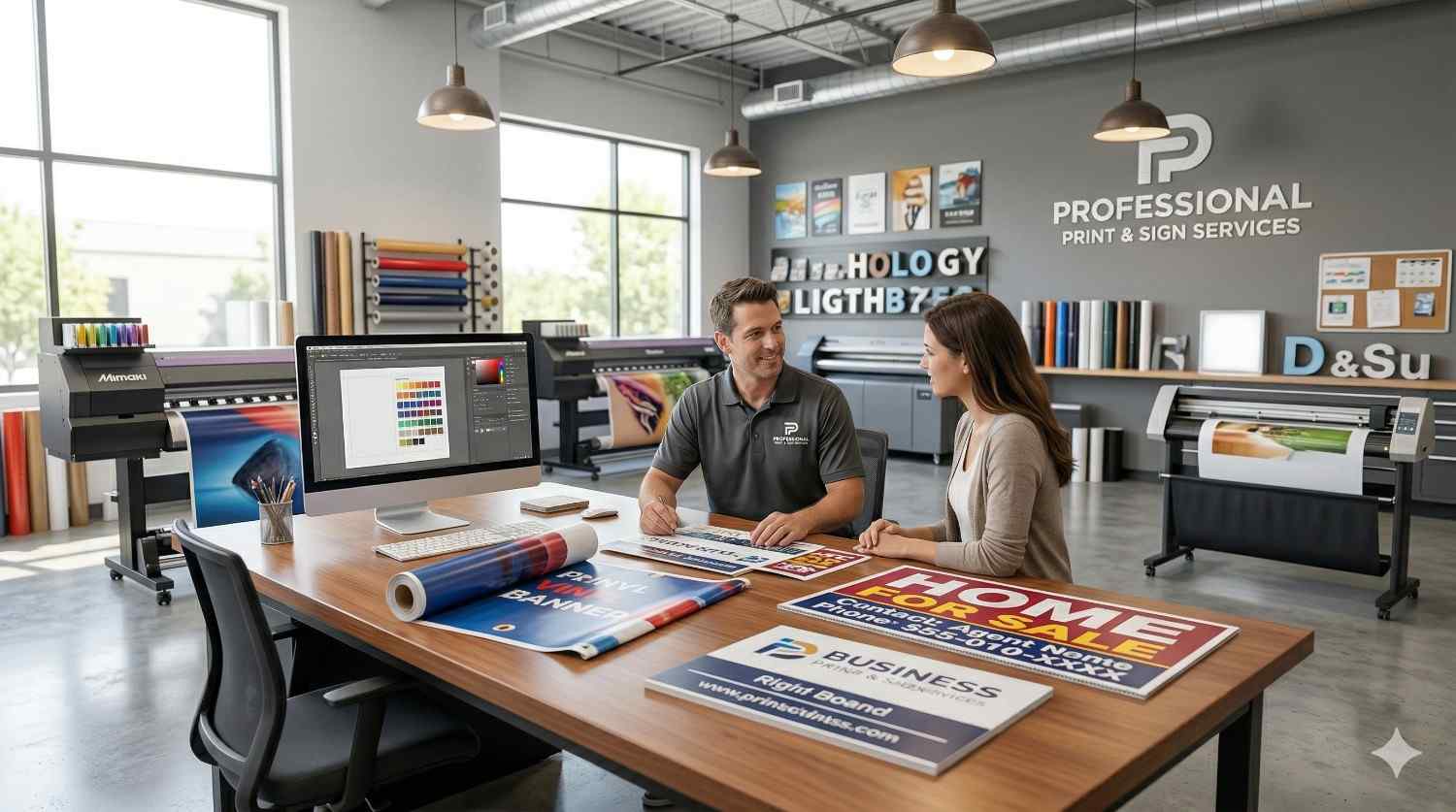
Not every sign shop delivers the same level of quality, service, or reliability. The provider you select determines whether your finished signs look professional, arrive on time, and hold up under real-world conditions. For businesses, a poorly made sign reflects directly on your brand. For individuals and event organizers, a missed deadline or color mismatch can derail an entire project.
Choosing the right sign shop is not just about finding the lowest price. It is about finding a provider that understands your needs, communicates clearly, and consistently delivers work that meets professional standards.
The Cost of Working with an Unreliable Sign Provider
Working with the wrong sign shop often costs more than the initial savings suggest. Reprints due to color errors, delays that push past your event date, or materials that fade within weeks all add up. A business owner who orders a storefront sign from an unvetted provider might receive a product with mismatched colors, poor adhesion, or incorrect dimensions. The cost to reorder and reinstall often exceeds what a reputable shop would have charged from the start.
Beyond direct financial costs, unreliable providers create stress and wasted time. You may spend hours chasing updates, correcting files, or negotiating refunds. These hidden costs make it essential to vet your sign shop thoroughly before committing to any order.
What Sets a Professional Sign Shop Apart
A professional sign shop operates with clear processes, experienced staff, and quality-controlled production. They provide detailed quotes, explain material options, and set realistic timelines. Their team can advise on file preparation, recommend the right sign type for your application, and flag potential issues before production begins.
Professional shops also invest in commercial-grade equipment. Wide-format printers, precision cutting tools, and professional finishing equipment produce results that consumer-grade or entry-level shops simply cannot match. The difference is visible in sharper graphics, more accurate colors, and longer-lasting finished products.
Types of Sign Shops and Printing Providers
Understanding the different types of sign and print providers helps you match your project to the right shop. Each type serves a different range of needs, and knowing the distinctions saves time and prevents mismatched expectations.
Full-Service Sign Companies
Full-service sign companies handle everything from design consultation to fabrication, printing, and installation. They typically offer the widest range of products, including channel letters, monument signs, building wraps, interior wayfinding, banners, and vehicle graphics. These shops employ designers, production specialists, and installation crews under one roof.
If your project involves custom signage, multiple sign types, or professional installation, a full-service sign company is usually the best fit. They manage the entire workflow and take responsibility for the finished result.
Quick-Print and Copy Centers
Quick-print shops and copy centers focus on fast, high-volume document printing, basic posters, and simple signage. They are convenient for everyday printing needs like flyers, brochures, and presentation materials. Most accept walk-in customers and offer same-day or next-day turnaround on standard orders.
However, quick-print centers may have limited capabilities for large-format printing, custom sign fabrication, or specialty materials. If your project requires anything beyond standard paper sizes or basic substrates, you may need a more specialized provider.
Online Sign Printing Services
Online sign companies allow you to upload files, select materials, and place orders entirely through a website. They often offer competitive pricing on standard products like vinyl banners, yard signs, and trade show displays. Shipping is typically included, and turnaround times range from a few days to a week or more.
The tradeoff is limited customization and no face-to-face consultation. If your file has issues or your specifications are unclear, there is no one to catch the problem before production. Online ordering works best when you have print-ready files and a clear understanding of what you need.
Specialty and Large-Format Sign Shops
Specialty sign shops focus on specific product categories such as neon signs, LED displays, architectural signage, or large-format graphics. Large-format shops operate wide-format printers capable of producing wall murals, building wraps, and oversized banners that standard print shops cannot accommodate.
If your project involves unusual materials, oversized dimensions, or specialized fabrication techniques, a specialty shop is the right choice. Their focused expertise often produces better results for complex or non-standard projects.
Key Qualities of a Reputable Sign Shop
Certain qualities consistently distinguish reputable sign shops from unreliable ones. Evaluating providers against these criteria helps you make a confident decision before spending any money.
Industry Experience and Portfolio
Experience matters in sign production. A shop that has been operating for several years has encountered a wide range of projects, materials, and challenges. They understand how different substrates perform in various environments, how to match brand colors accurately, and how to troubleshoot production issues before they affect your order.
Ask to see a portfolio of completed work. A reputable shop will have examples of past projects that demonstrate their range and quality. Look for projects similar to yours in scope, material, and application.
Range of Services and Capabilities
A sign shop with a broad range of services can handle your current project and future needs without requiring you to find a new provider each time. Look for shops that offer design support, multiple print and fabrication methods, various material options, and finishing services like lamination, mounting, and installation.
Shops with limited capabilities may outsource parts of your order to third parties, which can introduce delays, quality inconsistencies, and communication gaps.
Material Quality and Production Standards
The materials a sign shop uses directly affect the appearance and durability of your finished product. Reputable shops use commercial-grade vinyl, UV-resistant inks, and high-quality substrates designed for their intended application. They can explain the differences between material options and recommend the right choice for your environment, whether indoor, outdoor, temporary, or permanent.
Ask about their production standards. Do they perform color proofing? Do they inspect finished products before delivery? Quality control processes are a strong indicator of a shop that takes its work seriously.
Turnaround Times and Reliability
Reliable turnaround is one of the most important factors when choosing a sign shop. A reputable provider gives you a clear production timeline at the time of quoting and communicates proactively if anything changes. They build realistic schedules that account for design revisions, proofing, production, and finishing.
Be cautious of shops that promise unrealistically fast turnaround without understanding your project scope. Rush jobs are possible at many shops, but they should come with transparent pricing and honest communication about what is feasible.
Customer Reviews and Reputation
Online reviews provide direct insight into how a sign shop treats its customers. Look for patterns in Google reviews, Yelp, and industry-specific directories. Consistent praise for quality, communication, and on-time delivery is a strong positive signal. Repeated complaints about missed deadlines, poor print quality, or unresponsive staff are clear warning signs.
Pay attention to how the shop responds to negative reviews. A professional response that acknowledges the issue and offers a resolution demonstrates accountability. Defensive or dismissive responses suggest a provider that does not prioritize customer satisfaction.
How to Evaluate a Sign Shop Before You Order
Before placing an order, take a few deliberate steps to verify that a sign shop can deliver what you need. This evaluation process protects your budget, your timeline, and the quality of your finished product.
Review Their Portfolio and Past Projects
Start by reviewing the shop's portfolio on their website or social media pages. Look for projects that match your needs in terms of sign type, size, material, and application. A shop that regularly produces the kind of work you need is more likely to deliver a strong result than one that rarely handles similar projects.
If the shop does not have a visible portfolio, ask them to share examples directly. A reputable provider will be happy to show their work.
Ask About File Preparation and Design Support
File preparation is one of the most common sources of printing problems. Ask the shop what file formats they accept, what resolution they require, and whether they offer pre-flight file checks before production. A good sign shop will review your files for potential issues like low resolution, incorrect color profiles, or missing bleed areas and notify you before printing.
If you do not have a finished design, ask whether the shop offers design services or can recommend a designer. Many full-service sign companies have in-house design teams that can create your artwork from scratch or refine an existing concept.
Request a Detailed Quote and Compare Pricing
Always request a written quote that itemizes materials, labor, design fees, and any additional charges like rush fees or delivery costs. A detailed quote allows you to compare providers accurately and avoid surprises when the invoice arrives.
Be wary of quotes that seem significantly lower than competitors. Extremely low pricing often indicates lower-quality materials, less experienced staff, or hidden fees that appear later in the process. A fair price from a reputable shop reflects the true cost of quality materials and skilled production.
Check Certifications and Industry Affiliations
Industry certifications and affiliations signal that a sign shop meets recognized professional standards. Membership in organizations like the International Sign Association (ISA) or affiliations with established franchise networks indicate a commitment to industry best practices, ongoing training, and quality standards.
Certifications related to specific materials or installation methods, such as 3M Preferred Installer certification for vehicle wraps, provide additional assurance that the shop has verified expertise in specialized areas.
Visit the Shop or Request Samples
If possible, visit the sign shop in person. A walk-through gives you a firsthand look at their equipment, workspace, and production quality. You can see how organized their operation is, meet the team, and ask questions face to face.
If an in-person visit is not practical, request physical samples of their work. Holding a finished product lets you assess print quality, material thickness, color accuracy, and finishing details in a way that photos cannot replicate.
Questions to Ask a Sign Shop Before Committing
Asking the right questions before placing an order helps you set clear expectations and avoid misunderstandings. Here are the most important questions to ask any sign shop you are considering:
What types of signs and print products do you specialize in?
What file formats do you accept, and do you offer file review before printing?
What materials do you recommend for my specific application?
What is your standard turnaround time for this type of project?
Do you offer rush production, and what does it cost?
Can you provide a detailed, itemized quote?
Do you offer design services or design assistance?
What is your proofing process before production begins?
Do you handle delivery and installation?
What is your policy on reprints if there is a production error?
A reputable sign shop will answer these questions clearly and without hesitation. Vague or evasive responses are a reason to look elsewhere.
Red Flags to Watch for When Choosing a Sign Shop
Knowing what to avoid is just as important as knowing what to look for. These warning signs indicate a sign shop that may not deliver the quality or reliability you need.
No Portfolio or Proof of Past Work
A sign shop that cannot show you examples of completed projects is a significant risk. Every established shop accumulates a body of work over time. If a provider has nothing to show, they may be inexperienced, inconsistent, or unwilling to stand behind their output.
Vague Pricing or Hidden Fees
If a sign shop cannot provide a clear, written quote with itemized costs, proceed with caution. Vague pricing like "it depends" without further explanation, or quotes that omit setup fees, design charges, or delivery costs, often lead to invoice surprises. Transparent pricing is a hallmark of a trustworthy provider.
Poor Communication and Missed Deadlines
How a sign shop communicates during the quoting and pre-production phase is a reliable predictor of how they will perform during production. Slow email responses, unreturned phone calls, and vague timelines suggest operational issues that will likely affect your order. If communication is difficult before you have paid, it rarely improves afterward.
How to Find a Reputable Sign Shop in Dallas, TX
Dallas has a large and competitive sign and print market, which gives customers plenty of options but also makes it important to evaluate providers carefully. Here is how to narrow your search effectively in the Dallas area.
Search Local Directories and Google Reviews
Start with a Google search for sign shops in Dallas and review the Google Business profiles that appear. Pay attention to overall star ratings, the number of reviews, and the content of recent reviews. Look for shops with consistent positive feedback about print quality, customer service, and turnaround times.
Local business directories, the Better Business Bureau, and industry-specific listings can also surface reputable providers that may not appear at the top of a general search.
Ask for Referrals from Other Businesses
If you notice well-made signage at a local Dallas business, ask who produced it. Business owners are often willing to share their experience with a sign provider, including details about pricing, quality, and reliability that you will not find in an online review.
Referrals from other businesses carry significant weight because they come from customers who have been through the full production process and can speak to the end result.
Evaluate Walk-In Accessibility and Customer Service
For many customers, especially those without access to a printer or those who need quick turnaround, walk-in accessibility is a major factor. A sign shop with a welcoming storefront, knowledgeable counter staff, and the ability to handle walk-in orders provides a level of convenience and personal service that online-only providers cannot match.
Visit the shop during business hours. Observe how staff interact with customers, how quickly they respond to questions, and whether they take the time to understand your project before quoting.
Common Sign and Print Services to Look For
A reputable sign shop should offer a range of services that cover the most common signage and printing needs. Knowing what services are available helps you choose a provider that can handle your current project and grow with your future needs.
Custom Business Signs and Storefront Signage
Custom business signs include channel letters, dimensional lettering, monument signs, A-frame signs, and illuminated displays. Storefront signage is often the first impression a business makes, so quality materials and professional installation are essential. A reputable sign shop will guide you through material options, local permit requirements, and design considerations specific to your location.
Banners, Posters, and Large-Format Printing
Banners and posters are among the most frequently ordered sign products. They serve a wide range of purposes, from event promotion and trade show displays to retail signage and construction site barriers. Large-format printing capabilities allow a shop to produce oversized graphics on vinyl, fabric, foam board, and other substrates.
Look for a shop that offers multiple finishing options, including grommets, pole pockets, hemming, and mounting, so your finished product is ready to display immediately.
Document Printing and Finishing Services
Many sign shops also handle document printing, including reports, presentations, booklets, and marketing collateral. Finishing services like binding, lamination, folding, and cutting add a professional touch that standard office printing cannot achieve.
For individuals and small businesses without access to a printer, a sign shop that offers document printing alongside signage provides a convenient single-source solution.
Vehicle Wraps and Specialty Graphics
Vehicle wraps transform cars, trucks, and vans into mobile advertising platforms. This service requires specialized materials, precise measurement, and skilled installation. A reputable sign shop that offers vehicle wraps will have certified installers, a climate-controlled installation bay, and a portfolio of completed wrap projects.
Specialty graphics also include window films, floor graphics, wall murals, and trade show displays. These products require specific materials and application techniques that not every shop can provide.
How to Prepare Your Files for a Sign Shop
Proper file preparation is one of the most effective ways to ensure your sign or print project turns out exactly as expected. Submitting print-ready files reduces the chance of errors, speeds up production, and can save you money on design revision fees.
Accepted File Formats and Resolution Requirements
Most sign shops accept Adobe Illustrator (.ai), PDF, EPS, and high-resolution JPEG or TIFF files. Vector files are preferred for signage because they scale to any size without losing quality. Raster images like JPEGs and TIFFs should be at least 150 DPI at the final print size for large-format work, and 300 DPI for smaller, detail-critical prints.
If you are unsure whether your file meets the shop's requirements, send it for review before placing your order. Most reputable shops offer a free file check and will let you know if adjustments are needed.
Color Profiles and Bleed Settings
Sign shops print using CMYK color profiles, not the RGB color space used by most screens and cameras. If you submit an RGB file, the printed colors may look different from what you see on your monitor. Converting your file to CMYK before submission gives you the most accurate color representation.
Bleed is the area of your design that extends beyond the final trim line. Most shops require 0.125 to 0.25 inches of bleed on all sides to ensure clean edges after cutting. Your sign shop can provide their specific bleed requirements when you request a quote.
Working with a Sign Shop's Design Team
If you do not have a finished design or are unsure about file preparation, a reputable sign shop's design team can help. Many shops offer design services ranging from simple file adjustments to full custom design. Communicating your vision clearly, providing brand guidelines, and sharing reference images helps the design team produce artwork that matches your expectations.
Design collaboration also gives you access to the shop's production knowledge. Their designers understand what works in print, which fonts are legible at various sizes, and how colors translate from screen to substrate. This expertise prevents common design mistakes that affect the final product.
Conclusion
Finding a reputable sign shop requires evaluating experience, materials, communication, and production quality before placing your order. The right provider saves you time, protects your budget, and delivers professional results that represent your brand or project accurately.
In Dallas, the number of sign and print providers gives you options, but it also makes careful evaluation essential. Prioritizing shops with strong portfolios, transparent pricing, and proven reliability ensures your project is in capable hands.
We invite you to visit AlphaGraphics Dallas for expert guidance, fast turnaround, and dependable printing and signage solutions tailored to your exact needs.
Frequently Asked Questions
What should I look for in a reputable sign shop?
Look for a strong portfolio of past work, transparent pricing, positive customer reviews, and a clear production process. A reputable shop will also offer material guidance, file review, and realistic turnaround estimates.
How much does it cost to get a custom sign made?
Custom sign pricing varies based on size, materials, complexity, and installation requirements. A simple vinyl banner may cost under $100, while illuminated channel letters or vehicle wraps can range into the thousands. Always request an itemized quote.
How long does it take a sign shop to complete an order?
Standard turnaround for most sign and print projects ranges from three to seven business days, depending on complexity and current production volume. Rush options are available at many shops for an additional fee.
Can a sign shop help me design my sign from scratch?
Yes. Most full-service sign shops offer design services. You can provide your logo, brand colors, and general direction, and their design team will create a custom layout for your approval before production begins.
What file format should I send to a sign shop?
Vector formats like Adobe Illustrator (.ai), EPS, or high-resolution PDF are preferred. If you only have raster images, submit them at the highest resolution available. Your sign shop can advise on specific requirements for your project.
Is it better to use a local sign shop or order signs online?
A local sign shop offers face-to-face consultation, hands-on file review, and the ability to inspect materials and samples in person. Online ordering can work for simple, standard products, but local shops provide more control over quality and customization.
How do I find a good sign shop near me in Dallas?
Search Google for sign shops in Dallas and review ratings, customer feedback, and portfolios. Ask local businesses for referrals, check the Better Business Bureau, and visit shops in person to evaluate their facilities and customer service firsthand.
