
What Are the Seven Safety Symbols
The seven safety symbols are standardized pictograms used on signs, labels, and printed materials to communicate hazards, required actions, and emergency information at a glance. You will find them in workplaces, construction sites, laboratories, warehouses, and public buildings across Dallas and beyond. Each symbol uses a specific shape, color, and graphic so that anyone, regardless of language, can understand the message instantly.
If you need to print safety signs for your business, job site, or event, knowing what each symbol means is the first step toward staying compliant and keeping people safe. This guide breaks down all seven symbols, explains where they appear, and walks you through how to print safety signage that meets current standards.
Why Safety Symbols Matter for Printed Signs and Labels
Safety symbols save lives by delivering critical information faster than words alone. A red circle with a line through it tells someone to stop a specific action. A yellow triangle signals danger ahead. These visual cues work in seconds, which matters when someone is near a chemical spill, an electrical panel, or a fire exit.
For businesses in Dallas, printed safety signs are not optional. The Occupational Safety and Health Administration (OSHA) requires employers to post specific safety signage in workplaces where hazards exist. OSHA's standards align closely with the ANSI Z535 series, which governs the design, color, and placement of safety signs in the United States. Failing to display the correct signs can result in citations, fines, and, more importantly, preventable injuries.
Printed safety signage also matters for construction crews, event organizers, and property managers who need temporary or site-specific signs. Whether you are marking a wet floor, labeling a chemical storage area, or directing people to an emergency exit, the symbols on those signs must be accurate, visible, and durable enough to last in their environment.
Understanding the seven core safety symbols helps you order the right signs, verify that your existing signage is correct, and communicate clearly with your print provider about exactly what you need.
The Seven Safety Symbols Explained
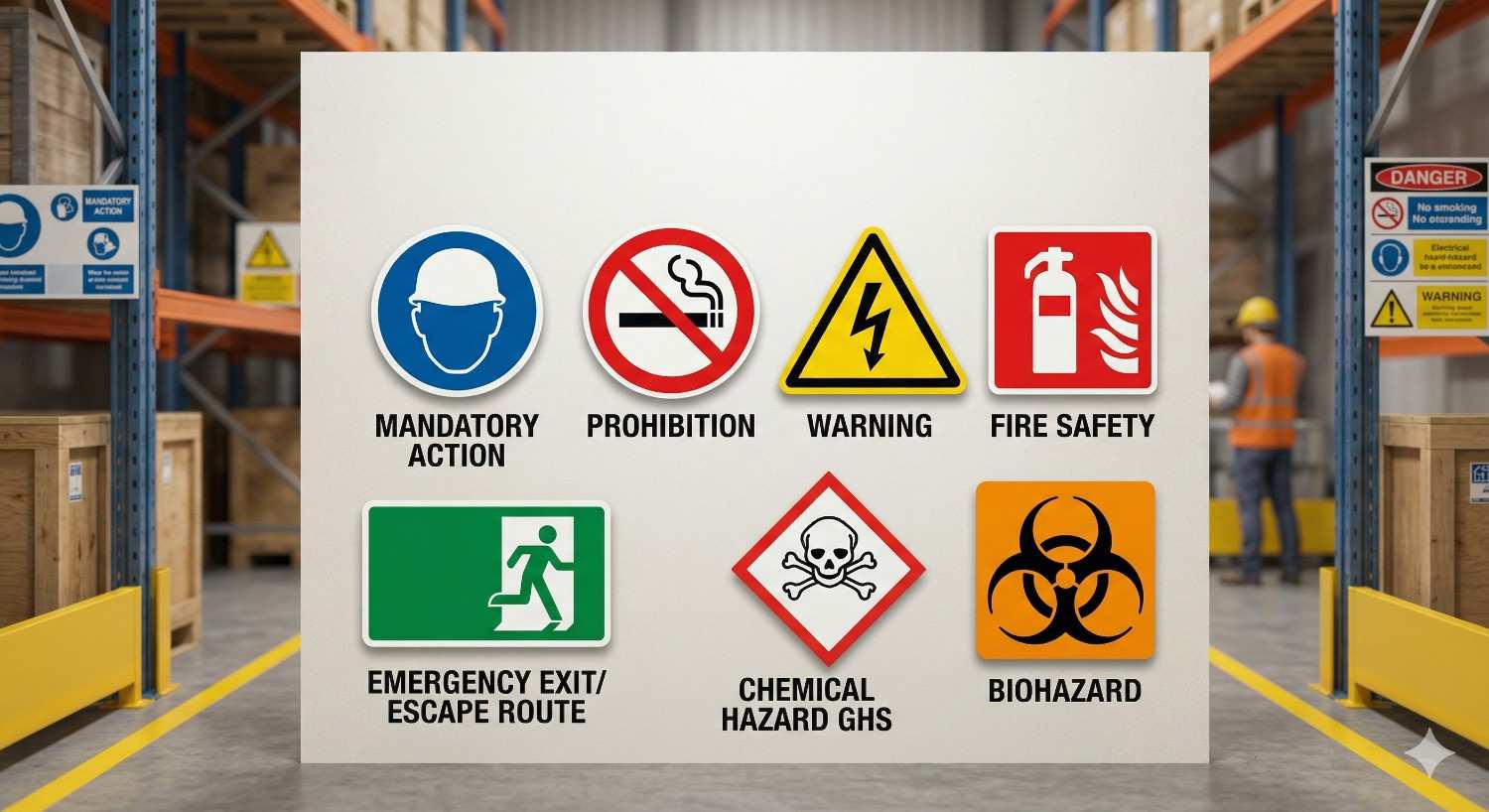
Each of the seven safety symbols follows international and national standards for shape, color, and meaning. Below is a clear breakdown of every symbol, what it communicates, and where you are most likely to encounter it on printed signs.
Mandatory Action Symbol (Blue Circle)
The mandatory action symbol is a solid blue circle with a white pictogram inside. It tells people they must perform a specific action in that area. Common examples include signs requiring hard hats, safety goggles, ear protection, or hand washing.
You will see blue circle signs at construction entrances, manufacturing floors, laboratories, and food preparation areas. The blue background with white icon is consistent across ISO 7010 and ANSI standards, making it recognizable worldwide.
When printing mandatory action signs, color accuracy is critical. The blue must be clearly distinguishable from other safety colors. A faded or off-color print can cause confusion, especially in environments where multiple sign types are posted close together.
Prohibition Symbol (Red Circle with Crossbar)
The prohibition symbol is a red circle with a diagonal red line (crossbar) over a black pictogram on a white background. It communicates that a specific action is forbidden. Examples include no smoking, no entry, no open flames, and no photography.
This is one of the most universally recognized safety symbols. OSHA's danger and prohibition signage standards specify that red is reserved for danger, stop, and prohibition messages. The contrast between the red border, white background, and black pictogram ensures high visibility even from a distance.
For printed signs, the red must be a true safety red, not orange-red or maroon. Large-format prints and outdoor signs need UV-resistant inks so the red does not fade over time, which would reduce the sign's effectiveness and compliance.
Warning Symbol (Yellow Triangle)
The warning symbol is a yellow (amber) triangle with a black border and a black pictogram inside. It alerts people to a potential hazard. Common warning signs include electrical hazard, slippery floor, falling objects, and forklift traffic.
Yellow warning triangles are among the most frequently printed safety signs for Dallas businesses. Warehouses, loading docks, parking garages, and retail stockrooms all use them. The triangular shape is specifically designated for warning messages under both ANSI Z535.4 and ISO 7010.
When preparing files for warning sign printing, make sure the yellow is a high-visibility amber, not a pale or greenish yellow. The black border and pictogram should be crisp and well-defined. For floor-level signs or outdoor applications, consider reflective or laminated materials.
Fire Safety Symbol (Red Square)
The fire safety symbol is a red square or rectangle with a white pictogram. It identifies fire-fighting equipment and their locations. Examples include fire extinguisher signs, fire hose reel signs, fire alarm call point signs, and fire blanket signs.
These signs are required in virtually every commercial building. Dallas fire codes, aligned with the International Fire Code (IFC), mandate that fire equipment locations be clearly marked. The red square format ensures that anyone looking for fire safety equipment can spot it quickly, even in smoke or low-light conditions.
Printing fire safety signs requires durable, heat-resistant materials. Thin paper prints will not hold up near kitchens, mechanical rooms, or outdoor areas. Rigid substrates like aluminum, PVC, or corrugated plastic are standard choices for fire safety signage.
Emergency Escape Symbol (Green Rectangle)
The emergency escape symbol is a green rectangle with a white pictogram. It marks emergency exits, evacuation routes, first aid stations, and safety showers. The green color universally signals "safe condition" or "go this way to safety."
Every commercial building in Dallas must have clearly posted emergency exit signs. The National Fire Protection Association (NFPA) and local building codes specify placement, size, and illumination requirements for exit and evacuation signage. Green emergency signs must be visible even when primary lighting fails, which is why many are printed on photoluminescent (glow-in-the-dark) material or paired with illuminated sign housings.
If you are printing evacuation route maps or directional exit signs, the green must meet the specific shade defined by safety standards. File preparation should include high-contrast white graphics on the green background, with no gradients or decorative elements that could reduce clarity.
Chemical Hazard Symbol (GHS Diamond)
The chemical hazard symbol follows the Globally Harmonized System of Classification and Labelling of Chemicals (GHS). It appears as a red diamond (rotated square) with a white background and a black pictogram. There are nine GHS pictograms in total, but the diamond-shaped chemical hazard symbol as a category is one of the seven core safety symbol types you will encounter.
Common GHS pictograms include the flame (flammable), skull and crossbones (acute toxicity), exclamation mark (irritant), corrosion symbol (corrosive), and the health hazard silhouette (serious health effects). OSHA's Hazard Communication Standard (HazCom) requires that all chemical containers and storage areas in U.S. workplaces display the appropriate GHS labels.
Printing GHS-compliant labels and signs demands precision. The red diamond border must be exact. Pictograms must match the standardized designs. Labels often need to be chemical-resistant and waterproof, especially in laboratories, cleaning supply rooms, and industrial facilities. Your print provider should use materials and inks rated for chemical exposure.
Biological Hazard Symbol (Biohazard Trefoil)
The biological hazard symbol, commonly called the biohazard symbol, is a distinctive three-lobed trefoil design, typically printed in black or fluorescent orange on a yellow or orange background. It warns of the presence of biological agents that pose a threat to human health, including bacteria, viruses, blood-borne pathogens, and medical waste.
You will find biohazard signs in hospitals, dental offices, veterinary clinics, research laboratories, and waste disposal areas. OSHA's Bloodborne Pathogens Standard (29 CFR 1910.1030) requires biohazard labeling on containers of regulated waste, refrigerators storing blood or infectious materials, and other areas where exposure risk exists.
Biohazard signs must be printed in the correct fluorescent orange or orange-red color with high contrast. The trefoil design is standardized and should never be altered, stylized, or combined with decorative elements. For medical and laboratory environments, signs are often printed on cleanable, moisture-resistant substrates.
Where You Will See Safety Symbols in Dallas Workplaces
Dallas is home to a wide range of industries that rely on printed safety signage daily. Construction sites across the city, from downtown high-rises to suburban commercial developments, require mandatory action signs, warning signs, and prohibition signs at every access point.
Warehouses and distribution centers along the I-35 corridor and in the Inland Port area use forklift warning signs, chemical hazard labels, and emergency exit signage throughout their facilities. Restaurants, hotels, and event venues in the Dallas Arts District and Deep Ellum need fire safety signs, wet floor warnings, and evacuation route maps.
Medical facilities, from large hospital systems to small dental practices, post biohazard symbols, chemical hazard labels, and mandatory PPE signs in clinical and laboratory areas. Schools and universities require emergency escape signage, fire equipment signs, and prohibition signs in labs and workshops.
If you manage or operate any type of facility in Dallas, a quick walk-through will likely reveal areas where safety signage is missing, faded, or outdated. Replacing those signs is not just a compliance issue. It is a practical step that protects employees, visitors, and your business.
How to Print Safety Signs That Meet Compliance Standards
Printing safety signs is not the same as printing a flyer or a banner. Safety signage must meet specific standards for color, size, symbol accuracy, and material durability. Here is how to get it right.
File Preparation Requirements for Safety Signage
Start with a high-resolution file. Safety sign graphics should be at least 300 DPI at the final print size. Vector files (AI, EPS, or PDF) are ideal because they scale without losing clarity. Avoid using low-resolution images pulled from web searches, as they will appear pixelated and may not match standardized pictogram designs.
Use the correct color values. Safety colors are defined by specific Pantone, CMYK, or RAL values in ANSI and ISO standards. For example, safety red is not the same as a generic red. Your file should specify the exact color codes to ensure accurate reproduction.
Include bleed and trim marks if your sign will be cut to size. A standard 0.125-inch bleed prevents white edges on the finished product. If your sign includes text, keep it within a safe margin so nothing critical is trimmed off.
Do not alter standardized pictograms. The symbols for prohibition, warning, mandatory action, and other categories are defined by international standards. Changing the line weight, proportions, or orientation of a pictogram can make your sign non-compliant.
Choosing the Right Material and Format
The material you choose depends on where the sign will be displayed and how long it needs to last.
Indoor signs in offices, hallways, and break rooms can be printed on rigid PVC, acrylic, or foam board. These materials are lightweight, easy to mount, and cost-effective for interior environments.
Outdoor signs need weather-resistant substrates. Aluminum composite panel (ACM), corrugated plastic, and treated PVC withstand rain, sun, and temperature changes common in the Dallas climate. UV-laminated prints resist fading from direct sunlight.
Chemical and laboratory environments require signs printed on materials that resist moisture, solvents, and cleaning agents. Polyester labels, vinyl with chemical-resistant lamination, and engraved plastic are common choices.
Temporary signage for construction sites or events can use corrugated plastic or banner material. These are affordable, portable, and durable enough for short-term use.
Your print provider should help you match the right material to your specific application. Providing details about the sign's location, expected lifespan, and environmental exposure ensures you get a product that performs as needed.
Common Mistakes When Printing Safety Symbols
Even well-intentioned businesses make errors when producing safety signage. Here are the most frequent problems and how to avoid them.
1. Using incorrect colors. A warning sign printed in bright yellow-green instead of amber yellow may not meet ANSI standards. Always reference the specific color codes defined by the applicable standard.
2. Scaling symbols disproportionately. Stretching or compressing a safety pictogram changes its standardized proportions and can make it harder to recognize. Always scale symbols uniformly.
3. Printing at low resolution. A blurry or pixelated safety sign looks unprofessional and may be difficult to read from the required viewing distance. Use vector files or high-resolution rasters.
4. Choosing the wrong material. A paper sign in a warehouse will not survive. A thin vinyl label on an outdoor fence will peel and fade. Match the material to the environment.
5. Omitting required text. Some safety signs require supplementary text below the symbol, such as "DANGER," "WARNING," or "CAUTION," along with a description of the hazard. Check ANSI Z535 requirements for your specific sign type.
6. Using non-standard pictograms. Clip art or custom illustrations may look similar to official safety symbols but do not meet compliance standards. Use only standardized pictogram designs from ISO 7010 or ANSI Z535 sources.
7. Ignoring size requirements. OSHA and ANSI specify minimum sign sizes based on viewing distance. A sign that is too small for its location fails to communicate effectively and may not satisfy regulatory requirements.
When to Replace or Update Your Safety Signs
Safety signs do not last forever. Environmental exposure, cleaning chemicals, physical damage, and UV fading all degrade printed signage over time. A sign that was compliant when first installed may become illegible or non-compliant after months or years of wear.
Inspect your safety signage at least twice a year. Look for fading colors, peeling edges, cracked substrates, and any signs that have been partially obscured or removed. If a sign's colors no longer match the standard safety color definitions, replace it.
You should also update signs whenever regulations change, your facility layout changes, or new hazards are introduced. If you add a chemical storage area, install new machinery, or modify an evacuation route, your signage must reflect those changes immediately.
Keeping a simple inventory of your safety signs, including their locations, installation dates, and condition, makes it easier to manage replacements proactively rather than reacting after an inspection or incident.
Conclusion
The seven safety symbols, mandatory action, prohibition, warning, fire safety, emergency escape, chemical hazard, and biological hazard, form the foundation of workplace safety communication. Understanding what each symbol means, where it belongs, and how it should look on a printed sign helps you protect people and meet compliance requirements.
Printed safety signage is only effective when it is accurate, durable, and properly placed. From file preparation and color accuracy to material selection and regulatory standards, every detail matters when producing signs that people depend on for their safety.
We help businesses across Dallas print compliant, professional safety signs with fast turnaround and expert guidance on materials, formats, and standards. Contact AlphaGraphics Dallas today to get your safety signage printed correctly the first time.
Frequently Asked Questions
What do the colors on safety symbols mean?
Each color communicates a specific type of message. Red means prohibition or fire equipment. Yellow means warning or caution. Blue means mandatory action. Green means safe condition or emergency escape. These color assignments are standardized by ANSI and ISO so they are consistent across all workplaces.
Are safety symbols required by law in Dallas businesses?
Yes. OSHA requires employers to post safety signs wherever workplace hazards exist. Dallas businesses must also comply with local fire codes and building codes that mandate specific signage for exits, fire equipment, and hazardous materials. Failure to display required signs can result in fines and citations.
What is the difference between a warning sign and a caution sign?
A warning sign uses an orange or amber background and indicates a hazard that could cause serious injury or death. A caution sign uses a yellow background and indicates a hazard that could cause minor or moderate injury. Both use triangular alert symbols, but the severity level and color differ under ANSI Z535 standards.
Can I print my own safety signs or do they need to be professionally made?
You can print your own safety signs, but they must meet ANSI and OSHA standards for color, size, symbol accuracy, and durability. Professional printing ensures correct color matching, high-resolution output, and appropriate materials for the sign's environment. A non-compliant sign can create liability issues.
What file format should I use when ordering printed safety signs?
Vector formats like AI, EPS, or vector PDF are best because they scale to any size without losing quality. If you only have raster files, make sure they are at least 300 DPI at the final print size. Avoid using low-resolution images from the internet.
How long do printed safety signs typically last?
Lifespan depends on the material and environment. Indoor signs on rigid PVC or acrylic can last five years or more. Outdoor signs on aluminum with UV lamination typically last three to five years. Signs exposed to chemicals, moisture, or heavy wear may need replacement sooner. Regular inspections help you catch fading or damage early.
What size should my safety signs be?
Sign size depends on the required viewing distance. OSHA and ANSI provide guidelines: a sign that needs to be readable from 50 feet away requires larger text and symbols than one viewed from 10 feet. Your print provider can help you determine the correct size based on where the sign will be installed and the applicable standard.
