
What Is Signage Income
Signage income is the revenue earned from producing, selling, leasing, or displaying signs, banners, and printed graphics. It includes money generated by sign companies, print shops, property owners, and businesses that offer custom signage services or rent out physical sign space.
Whether you run a print shop filling walk-in orders for posters and banners or you own commercial property with billboard space along a Dallas highway, signage income represents a tangible, recurring revenue stream. The signage industry in the United States generates tens of billions of dollars annually, and local providers capture a meaningful share of that through custom work, event signage, and large-format printing.
This guide breaks down exactly how signage income works, the types of signs that generate revenue, who earns it, how to calculate it, and practical ways to grow it. If you are a small business owner, a property owner, or someone exploring the print and signage industry, you will find clear answers here.
How Signage Income Works
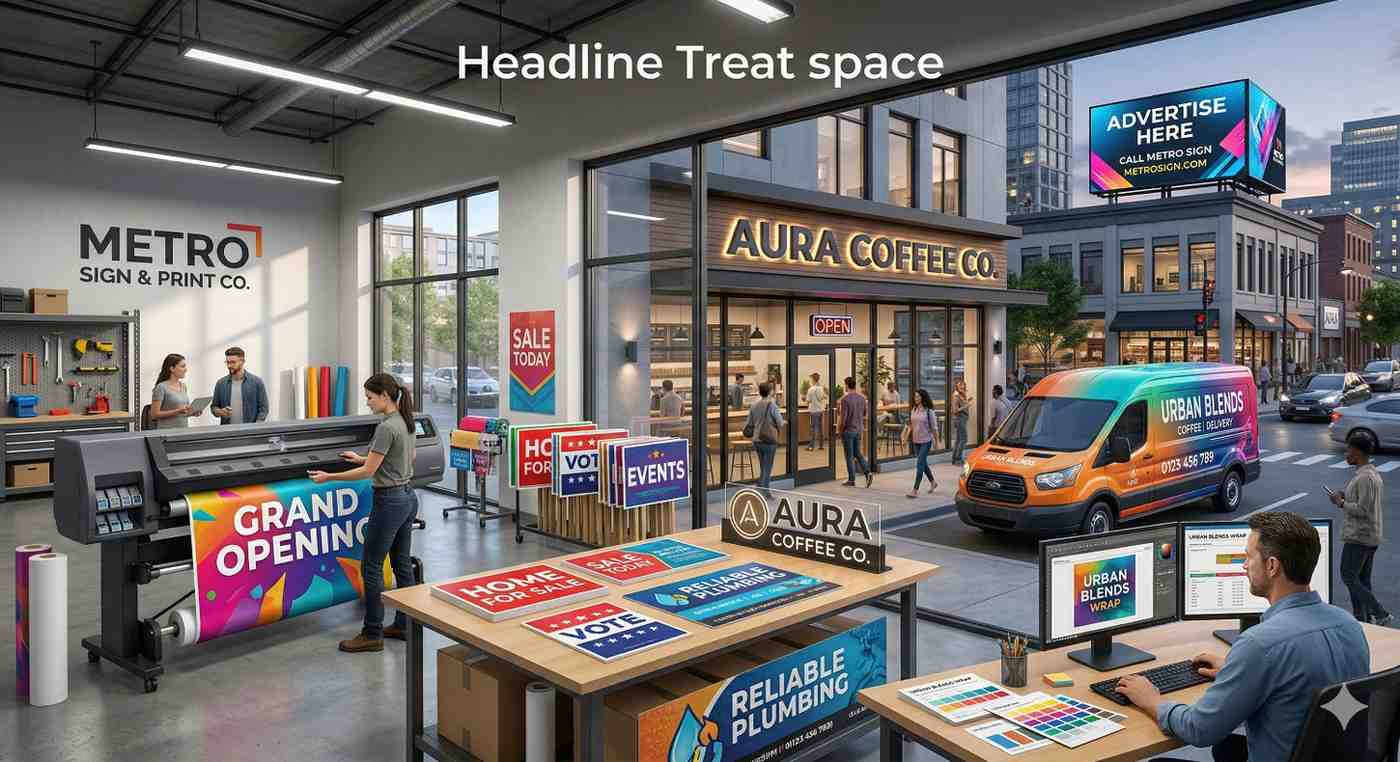
Signage income is generated whenever a business or individual pays for the design, production, installation, or display of a sign. The transaction can be a one-time sale, a recurring service agreement, or a lease arrangement. The revenue model depends on the type of signage, the customer relationship, and whether the income comes from making the sign or hosting it.
At its core, signage income flows from a simple exchange. A customer needs visibility. A sign company or property owner provides the physical medium for that visibility. The customer pays for materials, labor, design, and sometimes ongoing placement.
Revenue From Permanent Signage
Permanent signage includes storefront signs, channel letters, monument signs, and building-mounted displays. These projects typically involve higher upfront costs for the customer and higher profit margins for the provider. A single custom storefront sign installation in Dallas can range from a few hundred dollars for basic lettering to several thousand for illuminated channel letters or dimensional signs.
For sign companies, permanent signage income tends to come in larger, less frequent transactions. The revenue covers design consultation, material procurement, fabrication, and installation. Maintenance contracts for illuminated or electronic signs add a recurring income layer.
Revenue From Temporary and Event Signage
Temporary signage covers banners, yard signs, event displays, trade show graphics, and seasonal promotional materials. This category generates high-volume, repeat business. Event organizers, real estate agents, restaurants running promotions, and local businesses hosting sales all need temporary signs regularly.
The turnaround expectation for temporary signage is fast. Customers often need banners or posters within 24 to 48 hours. Providers who can meet tight deadlines command premium pricing and build loyal, returning customer bases.
Digital Signage and Recurring Income Streams
Digital signage introduces a subscription-based income model. Businesses that install and manage digital displays for clients earn monthly fees for content updates, hardware maintenance, and software licensing. A single digital sign placement can generate steady monthly revenue without the material costs of reprinting.
Property owners who host digital billboard displays earn lease income from advertisers. In high-traffic areas of Dallas, digital billboard lease rates can be substantial, making this one of the most passive forms of signage income available.
Types of Signage That Generate Income
Not all signs produce the same revenue. Understanding which signage types drive the most income helps sign companies and business owners allocate resources effectively.
Outdoor Signs and Storefront Displays
Outdoor signage is the highest-visibility category. It includes monument signs, pole signs, A-frame sidewalk signs, awning graphics, and window displays. Storefront signs are often the first investment a new business makes, creating a reliable demand pipeline for sign companies.
In Dallas, where commercial corridors and retail centers are dense, outdoor signage demand stays consistent year-round. New business openings, rebranding projects, and code-compliance updates all drive orders.
Indoor Signs, Banners, and Posters
Indoor signage covers lobby signs, directional wayfinding, wall graphics, posters, and point-of-sale displays. While individual indoor sign orders tend to be smaller in dollar value, they come in higher volume. Office buildings, medical facilities, schools, and retail stores all require interior signage.
Poster and banner printing is especially accessible for walk-in customers. Students printing presentation boards, small businesses creating in-store promotions, and event planners ordering directional signs all contribute to steady indoor signage income.
Vehicle Wraps and Mobile Signage
Vehicle wraps turn cars, vans, and trucks into moving advertisements. A full vehicle wrap can cost the customer anywhere from $1,500 to $5,000 or more, depending on the vehicle size and design complexity. Partial wraps and vinyl lettering offer lower-cost entry points.
For sign companies, vehicle wraps represent high-margin work. The material cost is moderate, but the labor and design expertise required justify premium pricing. Fleet wraps for local Dallas businesses, delivery services, and contractors create multi-unit orders that significantly boost signage income.
Custom Large-Format Graphics
Large-format printing covers wall murals, trade show backdrops, construction barricade graphics, and oversized banners. These projects require specialized equipment and expertise, which limits competition and supports higher pricing.
Custom large-format work often comes from corporate clients, property developers, and event production companies. A single large-format project can generate more revenue than dozens of standard print orders.
Who Earns Signage Income
Signage income is not limited to sign manufacturers. Several types of businesses and individuals earn revenue from signage-related activities.
Sign Companies and Print Shops
Sign companies and commercial print shops are the primary earners of signage income. They generate revenue through design services, material sales, fabrication, printing, and installation. A full-service sign company like AlphaGraphics Dallas earns income across the entire signage production chain, from initial consultation through final installation.
Print shops that offer both document printing and custom signage benefit from diversified income streams. A customer who walks in to print a report today may return next month for event banners or business signs.
Property Owners and Landlords
Property owners earn signage income by leasing sign space on their buildings, fences, or land. Billboard leases are the most common example. A property owner along a busy Dallas freeway or intersection can lease billboard space to advertisers for monthly fees that range from a few hundred to several thousand dollars, depending on traffic volume and sign size.
Some commercial landlords include signage rights in tenant lease agreements, earning additional income by controlling and renting out building-mounted sign positions.
Small Businesses and Freelancers
Freelance graphic designers who specialize in signage design earn income from creating sign layouts, vehicle wrap templates, and large-format artwork. Small businesses that invest in their own signage and then sublease display space to complementary businesses also generate signage income indirectly.
A coffee shop that installs a community bulletin board and charges local businesses a small fee for posting flyers is earning a basic form of signage income. The principle scales up from there.
How to Calculate Signage Income
Calculating signage income requires tracking both gross revenue from sign-related sales and the costs associated with producing and delivering those signs.
Pricing Models for Signage Services
Signage providers typically use one of three pricing models.
Per-project pricing sets a flat rate for each sign job based on materials, size, complexity, and turnaround time. This is the most common model for custom signs and one-time orders.
Per-square-foot pricing is standard for large-format graphics, banners, and vehicle wraps. Rates vary by material type and print quality, typically ranging from $5 to $30 per square foot for printed graphics.
Recurring or subscription pricing applies to digital signage management, maintenance contracts, and sign lease agreements. Monthly fees provide predictable, steady income.
Factors That Affect Signage Profit Margins
Several factors determine how much of your signage revenue becomes profit.
Material costs fluctuate. Vinyl, acrylic, aluminum, and LED components all have variable pricing based on supply chain conditions. Labor costs depend on whether work is done in-house or subcontracted. Design time adds cost that is sometimes undercharged. Installation complexity, especially for elevated or illuminated signs, increases expenses.
Sign companies that control more of the production process in-house typically achieve higher margins. Outsourcing fabrication or installation reduces margin but may be necessary for specialized work.
Tracking Signage Revenue and Expenses
Accurate income tracking requires separating signage revenue by category. Track permanent sign sales, temporary signage orders, large-format printing, digital signage fees, and lease income as distinct line items. This breakdown reveals which services are most profitable and where to focus growth efforts.
Expense tracking should include materials, labor, equipment depreciation, design software, vehicle and delivery costs, and marketing spend. The difference between gross signage revenue and total production costs is your net signage income.
How to Increase Signage Income
Growing signage income requires either increasing the volume of orders, increasing the average order value, or adding new revenue streams.
Expanding Your Service Offerings
A sign company that only produces vinyl banners leaves money on the table. Adding services like vehicle wraps, dimensional lettering, wayfinding systems, and digital signage management opens new customer segments and increases the average transaction size.
Offering complementary print services, such as document printing, business cards, and marketing collateral, brings walk-in traffic that can be converted into signage customers. Someone who comes in to print a flyer for their new business is a strong prospect for a storefront sign.
Targeting Local Businesses and Event Organizers
Local businesses in Dallas need signage for grand openings, seasonal promotions, trade shows, and ongoing branding. Event organizers need banners, directional signs, stage backdrops, and sponsor displays. Both segments generate repeat business.
Building relationships with local chambers of commerce, business associations, and event venues creates a referral pipeline. Offering package deals for event signage bundles, such as a banner plus yard signs plus a backdrop, increases order value.
Upselling With Large-Format and Custom Solutions
When a customer orders a basic banner, the opportunity exists to upsell to a retractable banner stand, a double-sided print, or a larger format. When a business orders window lettering, suggesting a full window wrap or adding a matching A-frame sign increases the total sale.
Upselling works best when it is framed as solving a problem. Instead of pushing a more expensive product, explain how a larger or more durable sign will last longer, attract more attention, or save money over time by reducing the need for replacements.
Signage Income for Property Owners in Dallas
Dallas property owners have specific opportunities to earn signage income based on the city's commercial landscape and regulatory environment.
Leasing Sign Space on Commercial Property
Properties along major corridors like Interstate 35, US-75, and the Dallas North Tollway are prime locations for billboard and sign leases. Property owners can lease rooftop space, wall-mounted positions, or ground-level sign pads to advertisers or sign companies.
Lease terms typically run from one to five years, with monthly payments that reflect traffic counts, visibility, and sign size. Some property owners negotiate revenue-sharing arrangements with billboard operators instead of flat-rate leases.
Local Regulations and Permits in Dallas, TX
The City of Dallas regulates signage through its sign ordinance, which governs sign size, placement, illumination, and type. Property owners and sign companies must obtain permits before installing most types of permanent signage. Temporary signs, such as banners and event displays, may have separate permit requirements and time limitations.
Understanding local regulations is essential for protecting signage income. A sign installed without proper permits can result in fines, forced removal, and lost revenue. Working with a knowledgeable local sign provider helps ensure compliance and avoids costly mistakes.
Common Mistakes That Reduce Signage Income
Several avoidable errors consistently eat into signage profits for both sign companies and businesses that invest in signage.
Underpricing Custom Sign Work
Custom signage requires design time, material expertise, and skilled fabrication. Pricing custom work based only on material cost ignores the value of expertise and the time invested in consultation, revisions, and project management. Sign companies that underprice custom work erode their margins and devalue the industry.
Accurate pricing accounts for design hours, material waste, setup time, and the complexity of installation. Customers who understand the value of professional signage are willing to pay fair prices for quality work.
Ignoring File Preparation and Production Costs
Poor file preparation is one of the most common sources of wasted time and materials in signage production. When customers submit low-resolution images, incorrect color profiles, or improperly sized files, the sign company absorbs the cost of fixing those issues or risks producing a subpar product.
Establishing clear file preparation guidelines and communicating them upfront reduces rework. Charging a design or file preparation fee for jobs that require significant correction protects margins and sets professional expectations.
Failing to Offer Fast Turnaround Options
Speed is a competitive advantage in the signage industry. Customers who need signs for an event this weekend or a store opening next week will pay a premium for fast turnaround. Sign companies that cannot deliver quickly lose those high-margin rush orders to competitors who can.
Investing in efficient production workflows, maintaining material inventory, and staffing for peak demand periods ensures you can capture rush orders. Offering tiered pricing with standard, expedited, and same-day options gives customers clear choices and maximizes revenue per order.
Conclusion
Signage income encompasses every dollar earned from designing, producing, selling, leasing, or displaying signs and printed graphics. It flows to sign companies, print shops, property owners, and businesses that understand how to price their work, serve their customers efficiently, and expand their service offerings strategically.
For anyone in the Dallas market, the demand for professional signage remains strong across every sector, from small businesses needing storefront signs to event organizers requiring fast-turnaround banners and property owners leasing billboard space. The key to growing signage income is combining quality production with clear communication, fair pricing, and reliable delivery.
We help individuals and businesses across Dallas turn their signage needs into finished, professional products every day. Contact AlphaGraphics Dallas to discuss your next sign project, get a quote, or walk in for fast, expert printing and signage solutions.
Frequently Asked Questions
What does signage income mean for a small business?
Signage income for a small business refers to the revenue generated from selling, producing, or displaying signs and printed materials. If you run a print shop or sign company, it is the money you earn from customer orders for banners, posters, storefront signs, and custom graphics.
How much can you earn from signage services?
Earnings vary widely based on the types of signage offered, the local market, and production capacity. A small sign shop can generate anywhere from a few thousand dollars per month to six figures annually, depending on service range, pricing strategy, and customer volume.
Is signage income passive or active?
It depends on the source. Producing and installing custom signs is active income that requires labor and materials for each job. Leasing billboard space or managing digital signage subscriptions can generate more passive, recurring income with less per-transaction effort.
What types of signs are most profitable?
Vehicle wraps, illuminated channel letters, and large-format custom graphics tend to carry the highest profit margins. These products require specialized skills and equipment, which supports premium pricing and limits direct competition.
Do property owners in Dallas need a permit for sign leasing?
Yes. The City of Dallas requires permits for most permanent signage installations. Property owners leasing sign space should verify that the sign type, size, and placement comply with the local sign ordinance before entering a lease agreement.
How do sign companies price their work?
Most sign companies use per-project pricing for custom work, per-square-foot pricing for large-format prints and wraps, or monthly subscription pricing for digital signage management. The final price reflects materials, labor, design time, complexity, and turnaround speed.
Can offering printing services increase signage income?
Yes. Adding document printing, poster printing, and marketing collateral services brings walk-in customers into your shop. Many of those customers have additional signage needs, such as banners, business signs, or event displays, creating natural upsell opportunities that increase total revenue.
